

Native American Heritage Month starts close to home in Long Beach |
A Place Worth Standing Up for in Long Beach |
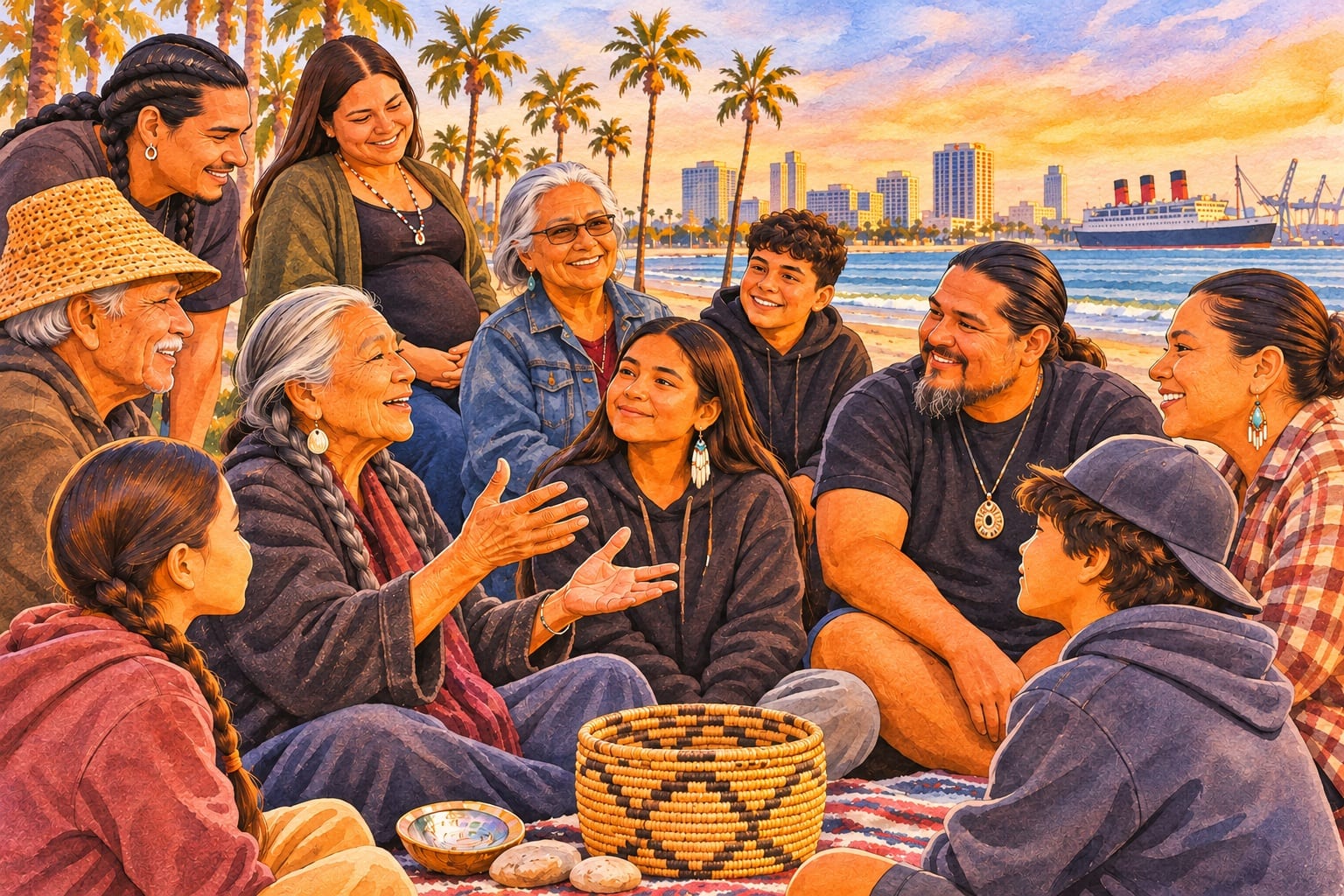
You don't have to leave Long Beach to take part in National Native American Heritage Month. At Cal State Long Beach, a place called Puvungna connects that November observance to people who continue to gather on land their communities hold sacred.
For the Tongva and Acjachemen peoples, Puvungna is not simply a place to remember the past. It is a place to keep traditions alive.
That connection has also given people a reason to stand up for the land. Among them was Lillian Robles, an elder of the Juaneño Band of Mission Indians who helped protect a gathering place that others would inherit.
When the university proposed developing the site into a strip mall, Robles pitched a tent there and stayed for 15 days, according to the Los Angeles Times. Her stand was part of decades of work protecting sacred sites across Southern California.
The land mattered for more than what might be built on it. Puvungna holds a central place in Southern California American Indian stories about their beginnings. The university's American Indian Studies program calls it “the gathering place.”
Puvungna once extended across what is now the campus and beyond. A portion remains on the campus's western side, where Native communities continue to hold ceremonies and spiritual gatherings, the Long Beach Post has reported.
Robles's protest is part of the story of how that place has endured. So are the people who continue to use it, care about it and pass its meaning to another generation.
Puvungna More than a Name on a Schedule
That family connection appeared in the program for the Puvungna Day of Celebration at Cal State Long Beach on Nov. 14. The schedule named Robles's son, Louis, as the leader of a memorial walk around Puvungna in her honor.
Long Beach Shoutouts stopped by the celebration, which carried the theme “Celebrating Native California's Resilience.” Organizers planned the day around Tongva and Acjachemen songs, stories and cultural practices, alongside other California American Indian traditions.
The published schedule offered ways to learn through beading, sand painting, coil basket making and Native plants. It also included a film screening and discussion. Those details describe the planned program, rather than activities witnessed by Long Beach Shoutouts.
Together, the offerings pointed toward something larger than a lesson about the past. They made room for traditions to be shared by people who continue to practice them.
Keeping the gathering place alive
The struggle over Puvungna did not end with Robles's protest. Tribal groups later challenged the university's dumping of construction soil on the land. A settlement restricted development and other uses while protecting tribal access for cultural, ceremonial and religious purposes, according to the Long Beach Post.
The agreement was an important step, not the end of every disagreement. American Community Media subsequently reported disputes over efforts to secure permanent protection for the site.
That history helps explain why a gathering here carries meaning beyond the day's activities. Keeping a place available for ceremonies also helps keep the connections between people, land and tradition alive.
A connection close to home
For Long Beach residents, Native American Heritage Month can begin with learning whose stories are rooted here. At Puvungna, those stories belong not only to the past, but to the people still gathering and the generations who will follow. |
0 Comments
Join the conversation
Be the first to comment
Share your thoughts above.